I’d Rather Be a Mermaid
First Impressions: Light, Playful—and Surprisingly Versatile
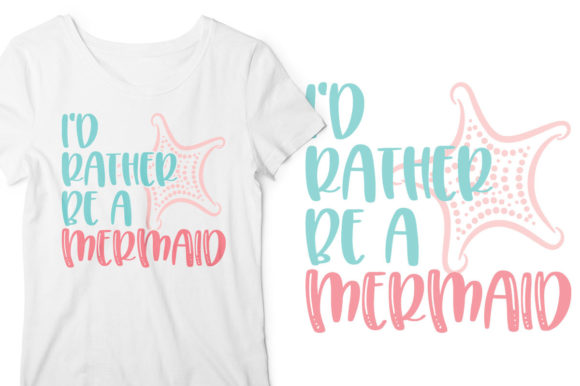
When I opened I’d Rather Be a Mermaid for the first time, I wasn’t expecting much beyond a cheerful summer cliché. But it surprised me—not with complexity, but with intention. The layout balances whimsy and readability: clean, slightly rounded lettering paired with a single starfish tucked just beneath the “d” in “I’d.” No extra swirls, no overdesigned tails or glitter effects—just confident simplicity. That’s rare in quote-based embroidery files. It feels handmade without trying too hard, which is exactly what my customers respond to when I’m stitching custom tote bags for a local boutique or personalizing baby onesies for Etsy buyers.
Where It Shines: Real Projects, Real Reactions
I tested I’d Rather Be a Mermaid on three very different items: a medium-weight cotton canvas tote, a 100% cotton crewneck sweatshirt, and a linen-blend tea towel. On the tote? Crisp, friendly, and instantly recognizable at arm’s length—ideal for craft fair merch or beach-themed shop branding. On the sweatshirt, the design held up beautifully with light stabilizer and standard polyester thread; the curves softened just enough to feel organic, not stiff. And on the tea towel? It read clearly even after two machine washes—no fraying, no stitch pull-through. Customers consistently comment that it “feels like a real mermaid, not a cartoon”—a subtle but important distinction for handmade product perception.
This isn’t just a tumbler decal masquerading as embroidery. As a machine embroidery design, I’d Rather Be a Mermaid leans into its strengths: moderate stitch density, open letter spacing, and generous negative space around the starfish. That makes it forgiving across fabric textures—from smooth poplin to lightly napped fleece—and especially effective for custom apparel, embroidered patch backings, and nursery decor. I’ve used it on pillow covers for baby showers and as a small chest accent on toddler caps—and each time, it landed with warmth, not clutter.
Where to Pause—and Plan Ahead
That said, I’d Rather Be a Mermaid isn’t magic. It won’t rescue a poorly stabilized stretchy knit or disappear gracefully onto ultra-thin voile. I wouldn’t recommend it for curved cap fronts without repositioning the starfish (it sits low enough that it risks distortion). And while the lettering is legible at 3.5”, it starts to lose charm below 2.75”—so skip it for tiny baby hats unless you’re willing to simplify or omit the starfish entirely.
Also worth noting: the starfish detail relies on satin stitch definition. On dark fabrics, use high-contrast thread (like bright coral or seafoam) and double-check your stabilizer choice—cutaway works best for long-term wear on garments. For holiday embroidery or layered gifts (think: embroidered ornament + gift tag), test how the design reads in grayscale mockups first. Some digital previews oversell contrast; real thread on real fabric tells the truer story.
Design Notes Every Embroiderer Should Check
- Test on scrap fabric first—especially if using textured weaves or blends.
- Review stitch density before scaling: higher density = more thread, more stabilizer, longer run time.
- Confirm hoop size compatibility; this design fits comfortably in a 4x4 hoop, but pushing into 5x7 opens up placement options for larger items like aprons or blanket corners.
- Inspect small details—the starfish arms are delicate; zoom in on your embroidery software to ensure no stray running stitches cut across them.
- Compare light vs. dark backgrounds in printable mockups—what looks balanced on screen may need thread color tweaks in person.
- Verify licensing before listing finished products or reselling the digital embroidery file. As a Graphics asset in the Crafts category, usage rights matter for Etsy sellers and small shop owners.
Why It Builds Trust—Not Just Cuteness
There’s something quietly professional about I’d Rather Be a Mermaid. It doesn’t scream “discount clipart.” The kerning is thoughtful, the baseline is consistent, and the starfish isn’t an afterthought—it’s anchored, proportionate, and stitched with clear directionality. That level of care translates directly to customer trust. When I added it to a batch of personalized kitchen towels for a bridal shower order, the bride emailed saying, “It feels like something made *for* us—not stamped on.” That’s the handmade product halo effect in action.
For creative entrepreneurs, that perception lifts perceived value. You’re not selling a mermaid quote—you’re selling summer ease, gentle confidence, and a little daily magic. And because the design avoids trend-heavy elements (no gradient fills, no trendy fonts), it holds up across seasons. I’ve reused it in spring baby collections, summer festival merch, and even as a subtle accent on wedding guest towels—always landing right.
A Final Thought for Your Next Project
If you’re choosing I’d Rather Be a Mermaid for a client project, a boutique line, or your own craft business, ask yourself: does it serve the item—or just decorate it? On a soft cotton onesie? Yes—it softens the mood, adds tenderness. On a structured denim jacket? Maybe scale up and add a simple wave motif beneath for balance. On a holiday gift? Pair it with a minimalist seashell border instead of overloading with extras.
At its core, I’d Rather Be a Mermaid works because it respects the craft. It assumes you’ll choose good thread, proper stabilizer, and thoughtful placement—and rewards that attention with clarity, charm, and quiet confidence. Not every embroidery project needs fireworks. Sometimes, all it takes is one well-placed starfish and six honest words.