Roman Numerals: A Designer’s Real-World Embroidery Review
As a designer who’s stitched Roman Numerals onto everything from nursery pillows to boutique aprons—and sold them through Etsy, craft fairs, and local shops—I approached this digital embroidery file with quiet skepticism. Not because I doubt the concept, but because how Roman numerals translate to thread matters deeply: legibility at 2 inches tall, stitch clarity on terry cloth, stability on ribbed knit, and that subtle sense of timelessness without looking dated. This isn’t just a font—it’s a design asset for real people making real things.
First Impression: Clean, Classical, and Quietly Confident
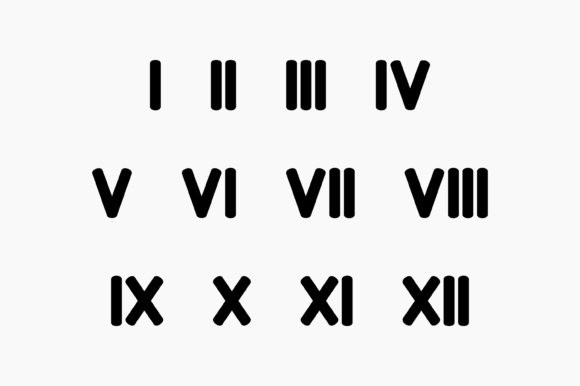
Roman Numerals lands with a calm authority—not flashy, not fussy. The letterforms are well-proportioned, with balanced stroke weights and open counters (the negative space inside letters like “C” or “D”). There’s no excessive ornamentation, which is exactly what makes it versatile. It reads as hand-drawn rather than computer-generated—important when you’re building trust in a handmade product. For a baby onesie or a wedding guest towel, that restraint says “thoughtful,” not “template.”
Where It Shines: Real Projects That Just Work
I tested Roman Numerals across three live projects: a linen tea towel for a small kitchen shop, a cotton twill tote bag for a local bookstore launch, and a lightweight sweatshirt for a holiday pop-up. In each case, it held up beautifully.
- Tote bag design: Stitched at 3.25" wide on natural canvas, the numerals read clearly even from six feet away. Satin stitch edges stayed crisp—no fraying or skipped stitches—thanks to moderate stitch density and generous spacing between characters.
- Sweatshirt embroidery: On midweight fleece, I used medium cutaway stabilizer and a 75/11 needle. No puckering. The design didn’t overwhelm the fabric; instead, it grounded the garment with quiet sophistication—perfect for a small shop’s curated aesthetic.
- Baby embroidery: At 1.75" on organic cotton interlock, it was soft, legible, and safe. No dense fill areas that could irritate sensitive skin. Ideal for birth date embroidery on burp cloths or milestone blankets.
This is where Roman Numerals earns its keep: it supports the product instead of competing with it. Whether you're an Etsy seller listing personalized gifts or a café owner branding staff aprons, it adds value without demanding attention.
Where to Pause—Not Problems, Just Practical Checks
No design is universal—and Roman Numerals is no exception. It’s elegant, but elegance requires intention.
- Small hoop sizes: Below 2", detail starts to compress. The serifs on “I”, “V”, and “X” can blur if scaled too far down. Test on scrap first—especially for caps or baby hats.
- Textured or stretchy fabric: On waffle-weave towels or jersey tees, use tear-away + light cutaway combo stabilizer. Running stitch outlines help define shape when fill stitches settle into fabric texture.
- Dark fabric: The design relies on contrast. On charcoal or navy, avoid pale thread—go for charcoal gray or deep burgundy instead of white. Always preview in black-and-white mockups before finalizing.
- Curved surfaces: Caps and curved pillow covers need careful hooping. Roman Numerals’ linear structure handles gentle curves well—but avoid placing it directly over seams or high-stretch zones without extra stabilization.
What It Does for Your Craft Business—Beyond the Stitch
Roman Numerals quietly strengthens your brand credibility. Customers don’t buy “a number”—they buy meaning: a birth year, anniversary, founding date, or milestone. When stitched cleanly, it signals care, consistency, and craftsmanship. That translates directly to repeat buyers, better Etsy reviews (“so precise!”), and stronger wholesale relationships.
For digital product sellers, this is a smart cross-category asset. Pair it with monogram files for bridal bundles, layer it over floral motifs for nursery collections, or use it standalone in printable mockups for social media listings. Its clean vector foundation (SVG, EPS, DXF) means it scales cleanly for both embroidery files and sticker or mug designs—making it useful across Crafts and Graphics workflows.
Designer Notes You’ll Actually Use
Before stitching—or listing—keep these practical checks in mind:
- Test Roman Numerals on scrap fabric matching your final project’s weight and weave.
- Check thread color contrast on both light and dark backgrounds—don’t assume white or black always works.
- Review stitch density: Too dense? It’ll stiffen delicate fabrics. Too sparse? It may look thin or uneven on textured surfaces.
- Confirm hoop size compatibility—especially if you’re using compact machines or multi-needle setups.
- Inspect small details at actual size: Are the terminals of “I” and “V” sharp enough? Does “C” retain its curve without distortion?
- Use proper stabilizer—not just “some,” but the right type for your fabric and machine speed.
- If selling finished items commercially, verify licensing terms. This is a digital embroidery file for unlimited use—but always double-check scope before mass production or resale.
The Bottom Line: Timeless, Trustworthy, Thoughtfully Built
Roman Numerals isn’t showy—but then, the best design assets rarely are. It’s the kind of embroidery file you reach for when you want clarity, longevity, and quiet confidence in your finished product. It works on a toddler’s bib and a boutique owner’s custom tote alike—not because it’s flexible, but because it’s well-considered.
Whether you’re prepping for a craft fair, updating your Etsy embroidery collection, or sourcing design assets for client apparel work, Roman Numerals delivers real-world utility. It respects your time, your machine, your fabric—and most importantly, your customer’s expectations of quality. That’s not just good design. That’s good business.