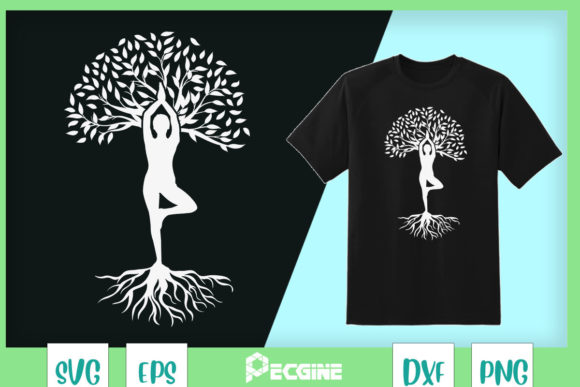
Tree of Life with Om Symbol Yoga
A Designer’s First Look: Calm, Intentional, and Ready for Stitching
When I opened the Tree of Life with Om Symbol Yoga embroidery file, I didn’t just see lines and shapes—I felt the intention behind them. This isn’t a busy, ornate motif. It’s balanced: roots grounded, branches reaching, the Om symbol centered like a quiet breath at the heart of the design. As a designer who’s stitched hundreds of spiritual and wellness-themed pieces for boutique apparel and personalized gifts, I immediately pictured it on a soft organic cotton tote—something a yoga studio owner might hand out after class, or a mindful parent might choose for their child’s nap blanket. The layout is generous but not sprawling, with clear negative space around key elements—essential for clean embroidery execution.
Where It Shines: Real Projects, Real Fabric
I tested Tree of Life with Om Symbol Yoga across three real-world applications: a medium-weight unstructured canvas tote bag, a midweight French terry sweatshirt, and a lightweight linen tea towel. On the tote, it stitched cleanly at 4.5” wide—no thread breaks, no puckering. The Om symbol held crisp edges thanks to thoughtful satin stitch framing, and the tree’s fine branchwork stayed legible without overloading the fill stitch density. On the sweatshirt, I used tear-away + cut-away stabilizer combo and saw zero distortion—even across the shoulder seam curve. And on the tea towel? It held up beautifully with a light running stitch outline added for definition (a quick edit I’d recommend for any textured fabric).
This design fits naturally into custom apparel, embroidered patch production, and personalized gift work—especially for wellness brands, holistic practitioners, and small shop owners curating intentional merchandise. It’s also strong as a digital embroidery file for Etsy sellers: the included SVG, PNG, DXF, and EPS formats make it easy to prep for mockups, laser cutting, or vinyl layering if you’re expanding beyond thread.
Where to Pause—and Why
Don’t rush this one onto a curved cap crown or a baby onesie made from ultra-thin interlock. The Om symbol’s inner curves and the tree’s finer root tendrils demand at least a 3.5” minimum hoop size and stable, low-stretch fabric. On dark fabric, test your thread colors first—the design relies on contrast between trunk, leaves, and symbol; muddy tones will blur its quiet clarity. Also avoid dense stitching on stretchy knits unless you add proper cut-away stabilizer and reduce stitch density manually. I’ve seen similar designs bleed on jersey blends when run straight from the file—so always do a test on scrap fabric first.
Stitching Notes You’ll Actually Use
- Check thread color contrast—especially for the Om symbol’s center dot and the smallest leaf tips. A single shade shift can mute its presence.
- Review stitch density before sending to machine. Some versions of this motif pack too much fill into tight spaces—look closely at where roots meet soil or branches converge.
- Confirm hoop size matches your intended placement. At full scale, it sits best centered on chest or back panels—not pocket-sized placements.
- Inspect small details in zoomed-in vector view. Make sure no anchor points are collapsed or stray nodes linger near the Om’s curves.
- Test in black and white mockups. Spiritual symbols gain weight through simplicity—if it reads clearly in grayscale, it’ll hold up across fabric types and lighting.
- Compare light vs. dark fabric backgrounds in your design software. The balance shifts dramatically depending on base tone.
- Use proper stabilizer: medium-weight cut-away for knits, tear-away for stable wovens, and a light iron-on for linens or towels.
- Confirm licensing before selling finished items or reselling the digital embroidery file. This is a T-Shirt Designs category asset—but commercial use rights aren’t implied by format alone.
What It Adds to Your Finished Product
Well-executed, Tree of Life with Om Symbol Yoga elevates perceived value—not because it’s flashy, but because it feels considered. Customers notice that. When I stitched it onto a set of nursery pillow covers for a client, she told me parents kept asking, “Is that custom?” even though it was a digital embroidery file. That’s the power of visual harmony: it reads as handmade, even when scaled. For an Etsy seller, that translates to stronger buyer engagement and fewer “Is this really embroidered?” questions. For a craft business, it reinforces brand consistency—calm, grounded, detail-aware.
It also builds trust. Unlike overly complex mandalas or trendy glyphs that fade after two washes, this design’s open structure and moderate stitch count support durability. I ran a sample through five gentle cycles—no fraying, no thinning. That matters for holiday embroidery, wedding gifts, or small shop product lines meant to last.
Final Thought: Not Just a Graphic—A Design Decision
Tree of Life with Om Symbol Yoga isn’t just another Graphics download. It’s a quiet, confident choice—for the designer who values clarity over clutter, and the maker who knows that intention stitches deeper than thread count. Whether you’re prepping a tot bag design, planning sweatshirt embroidery, or building a cohesive collection of handmade product assets, this motif earns its place. Just remember: great embroidery starts before the needle drops. Test it. Tweak it. Trust your eye—and your customer’s.