Skull Flower: A Designer’s Real-World Embroidery Review
Let’s say you’re prepping for a weekend craft fair and need a standout design for embroidered cotton tote bags—something edgy but approachable, detailed but not fussy, with enough personality to draw eyes at a glance. That’s exactly where Skull Flower landed on my worktable last month. As someone who’s stitched hundreds of custom pieces—from baby onesies to boutique aprons—I don’t just open embroidery files and stitch. I pause. I zoom in. I hold them up against fabric swatches. And I ask: *Will this hold up in real life?*
First Impression: Bold, Balanced, and Unexpectedly Warm
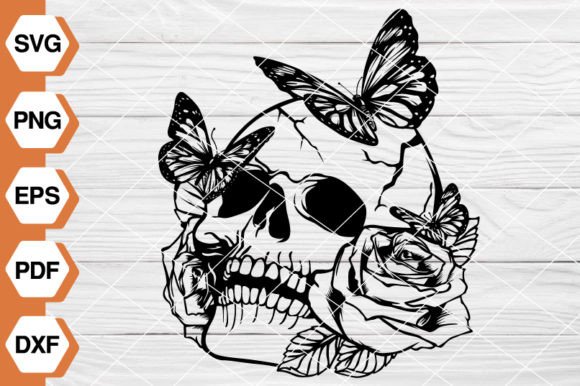
At first glance, Skull Flower reads as gothic—but it’s not cold or harsh. The skull is stylized, not anatomical; its curves soften the edges, and the floral elements (a central bloom with trailing vines) wrap around it like quiet intention, not decoration. There’s rhythm in the line weight—clean transitions between thicker stems and delicate petals—and the negative space feels intentional, not accidental. This isn’t just an Illustrations file slapped onto a canvas. It breathes like a hand-drawn sketch translated with care.
For embroidery designers, that matters. A design this balanced translates well into satin stitch outlines and controlled fill areas. You won’t fight jagged vector corners or overcomplicated layering. And because it’s “welded together” (as noted in the product description), there’s no surprise separation during digitizing—no rogue petal floating off when you import into your embroidery software.
Where Skull Flower Shines in Real Projects
- Embroidered tote bags: Its mid-size footprint (roughly 4–5 inches wide) fits neatly on the front panel without overwhelming the canvas. On natural canvas or heavy cotton duck, the contrast between skull structure and floral softness reads beautifully—even from across a crowded market aisle.
- Sweatshirt embroidery: Tested on a medium-weight French terry, Skull Flower held crisp detail in both satin-stitched outlines and smooth fill zones. No puckering, even around the eye sockets, thanks to thoughtful spacing and moderate stitch density.
- Baby embroidery & nursery decor: Yes—really. Used in soft pastel thread on ivory organic cotton, the skull reads more “whimsical mascot” than macabre. Paired with a simple monogram or tiny crescent moon, it becomes a cohesive, gender-neutral nursery motif.
- Embroidered patches: Because the design is fully closed and welded, it’s ideal for clean-edged iron-ons or sew-on patches. No stray anchor points. No thin connectors that snap during cutting.
- Holiday and wedding gifts: Surprised? Don’t be. Stitched in deep burgundy or charcoal gray on linen tea towels or velvet pillow covers, Skull Flower reads as heirloom-level—not trendy, but timeless in its contrast of mortality and growth.
Where to Use Caution (and Why)
This isn’t a one-size-fits-all embroidery file—and that’s a strength, not a flaw. Here’s where attention pays off:
- Small hoop sizes (under 4 inches): The vine details and inner petal layers may compress or lose clarity. Test stitch a scaled-down version before committing to a 3-inch cap front.
- Stretchy fabrics (like jersey or rib knits): Stabilizer choice is non-negotiable. Use cutaway + topping for best results—especially around the skull’s hollows, where stitches can sink or distort.
- Dark or textured fabrics: The PNG and PDF previews help, but always mock up in black-and-white first. Some fine vine lines may disappear on heather grey or bouclé—we found switching to a slightly heavier running stitch in those areas preserved legibility.
- Frequent-wash items (baby clothes, kitchen towels): Confirm your digitized version avoids ultra-thin satin columns or isolated fill islands. Dense stitch areas hold up better—but avoid overloading the center bloom with excessive underlay.
What It Does for Your Craft Business
As an Etsy seller or small shop owner, your customers aren’t buying pixels—they’re buying confidence. Confidence that the design looks handmade, not mass-printed. Confidence that it’ll photograph well on your listing. Confidence that it’ll translate across products: a patch today, a sweatshirt next week, a printable mockup for your social feed tomorrow.
Skull Flower delivers that. Its visual personality is distinct enough to become part of your brand voice—think “thoughtful edge,” not “generic goth.” When stitched cleanly, it elevates a basic tote into a conversation piece. When offered as a digital embroidery file in your shop, it attracts makers who value mood *and* usability.
And yes—it works in commercial embroidery. The clean vector paths (SVG, EPS, DXF) import smoothly into Wilcom, Pulse, and Embrilliance. No broken nodes. No hidden layers. Just one cohesive Graphics asset, ready for professional digitizing—or direct use if your machine supports SVG imports.
Practical Designer Notes Before You Stitch
- Always test on scrap fabric first—especially with new stabilizer combos or thread brands.
- Check thread color contrast early: try the same design in charcoal + cream vs. black + white on your mockup background.
- Review stitch density in your digitizing software—don’t assume the original file’s fill settings match your fabric’s needs.
- Confirm hoop size compatibility. If stitching on curved surfaces (caps, sleeves), consider splitting the design or adjusting tension manually.
- Inspect small details at 200% zoom—especially where vines meet skull contours. Tiny gaps can vanish in stitching, but overly tight joins may cause thread breaks.
- Test in black-and-white mockups. If it reads clearly without color, you’ve got strong composition.
- Verify licensing terms before selling finished items or bundling Skull Flower into your own digital embroidery kits.
In short: Skull Flower isn’t just another download. It’s a versatile, emotionally intelligent embroidery file—one that earns its place in your design library by working as hard as you do. Whether you’re stitching a personalized gift, building a boutique collection, or scaling a craft business, this design doesn’t shout. It resonates.